
Ashwagandha has recently emerged as a “Top Ten” Herb of Commerce, in the canine world anyway – one of the herbs that everyone is giving or at the least, talking about. And while I deeply applaud herbal knowledge shared widely, it needs to be used wisely as well. As I have said many times with regard to cinnamon and ginger used to supply nutrients, or turmeric for basically every dog all the time, or the thankfully short-lived cleaver’s thing (just…..no)! I am going to share a bit about Ashwagandha, because it IS a great herb to know and can provide important benefits for many dogs. But – as with any herb – not every dog, not all the time, often it is not the right choice, sometimes it can be problematic.
First off, some basic info.
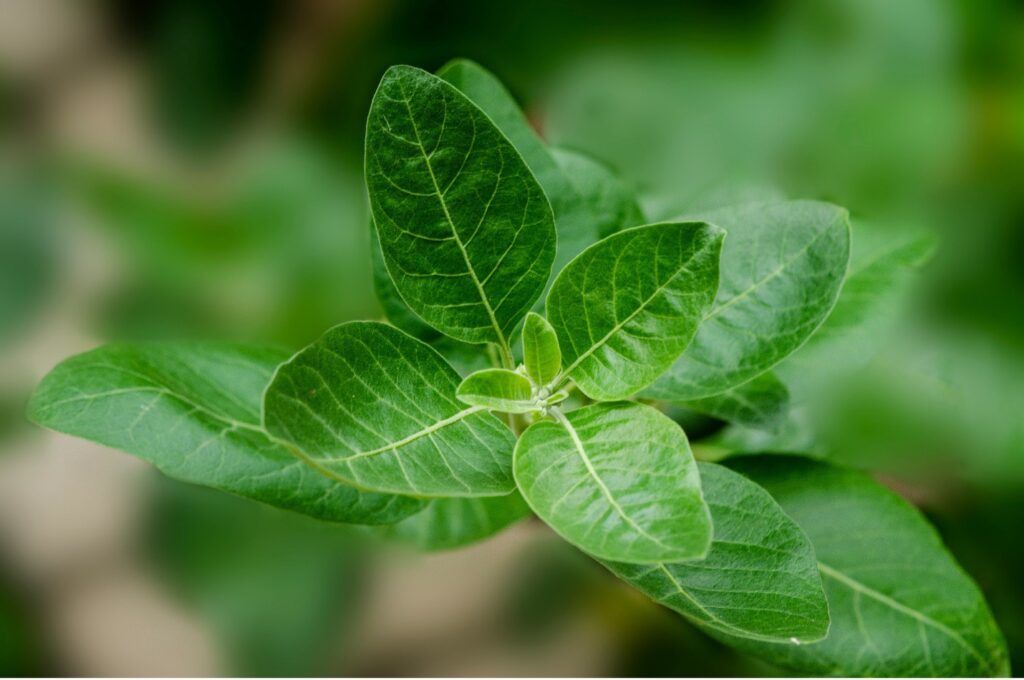
Name: Ashwagandha (Withania somnifera)
Family: Solanaceae
Region: Africa, India, Asia
Parts Used: Primarily the root, but leaf, flower and seed as well
Actions: anti-inflammatory, endocrine and immune system tonic/immunomodulator, adaptogen, relaxing nervine, antiseptic, antitussive (leaf)
Constituents: alkaloids, saponins steroidal lactones
Energetics: warm, dry, sweet, bitter
Affinities: heart, kidney, nervous system
Indications
Anxiety, CCD (especially with ‘Sundowner’ syndrome) respiratory disease (except in active infection with copious mucus) malnourished, weakened dogs, dogs with arthritis, sluggish immune system, thyroid stimulant
Contraindications and Interactions
Don’t use Ashwagandha in pregnancy: it should not be used with barbiturates. I don’t combine Ashwagandha with any anxiolytic or sedative type medication. Hyperthyroidism is rare in dogs, but avoid Ashwagandha if it occurs, and I personally feel that dogs who have been diagnosed with hypothyroidism and are medicated, should avoid it as well. I’m wary with dogs who have a history of upper GI distress, like reflux; if I need Ashwagandha absolutely for such an individual I’m careful to administer it with food, especially some fat and possibly a mucilaginous herb like marshmallow, proactively. If your dog develops reflux, or vomits after being given Ashwagandha, it follows you need to stop.
Dose and Delivery
For the dried herb, consider a range of 50 to 125 mgs per kg of body weight, if using extracted, dried herb; if using unprocessed, you can double or even tripe the amount, but we usually consider higher doses when the herb is used alone, not in formulation.
To decoct the cut and dried root, use between 5 and 30 mgs in 8 ounces water, simmered down to 6 ounces slowly and cooled. Then administer ¼ to ½ cup TID, if possible.
Because of the strong smell/taste, I like to use Ashwagandha in powder form. Using powder in strongly flavoured foods like green tripe can work, as well as various recipe using goat’s milk, cinnamon, ripe banana if your dog enjoys it and a little honey.
As you can see, there are a lot of variables, so I often start at the lower end of the range and add more strength if I do not see results. If we are near the upper limit and not accomplishing what the herb was given for, I move on or use less in formulation. That said, I rarely use Ashwagandha singly, without supportive herbs. I’ve baked Ashwagandha in almond- meal based treats with ginger and cinnamon, added it to bone broth with other herbs, pureed cooked ground beef with liver and made mini meatloaf out of it.
All of these and many more recipes in my ebooklet to come! You can simply add it to tripe, a little ground meat, or goat’s milk, of course. Think of a dose range between 100 and 500 mgs, once or twice per day, for the powder.
Practical Indications
My experience with Ashwagandha has been extensive, and while I don’t keep precise notes on every case since I began this work, I do have files dating back twenty years and many, many individuals stand out. I reach for Ashwagandha with many of the issues you would expect – dogs who need an adaptogen, or support managing a stressful situation OR who perceive everyday situations as stressful – especially those who have restless nights, or seem to find it difficult to settle fully, dogs who seem on edge all the time, even after exercise.
Ashwagandha’s ability to ease nervous tension and help with sleep is extremely helpful in these cases, although it takes a few days to start working – for more immediate results think California poppy or Passionflower. I include Ashwagandha in some, but not all arthritis protocols – if a dog has shown sensitivity to any other member of the Nightshade family, I may look to other herbs for anti-inflammatory support.
One of the most powerful reasons people want to use Ashwagandha with their dog is to “help alleviate stress”. This is of course, a kindness and a caring thing to seek, but adaptogens, while they help the body COPE, are:
- not a one-size-fits-all herbal action, and really should be formulated with a full evaluation of the individual taken into consideration, and
- should never be used to help a dog endure a stressful situation that really needs to be changed, not just medicated.
Adaptogens need to fulfil three criteria to be identified as such, and the herbs that fall into this category are quite different in terms of energetics, other constituents, organ affinities – meaning Tulsi is not Eleuthero is not Rhodiola is not Ashwagandha. Because this herb, or any herb, has suddenly started to pop up everywhere, especially when touted as a panacea, does not mean your dog needs it or will necessarily benefit from it.
So, when do I recommend Ashwagandha? For starters, it is a great herb for older dogs who are suffering from an inflammatory condition like arthritis, and often when a dog presents as arthritic and anxious, whether the anxiety started early in life or has developed in senior years. Insomnia is a powerful indicator that we need some Ashwagandha in the older, anxious dog, consider it with “sundowner syndrome”, when a geriatric dog exhibits pacing, disorientations and anxiety during the night.
What stands out in my mind about Ashwagandha is this; there are many other herbs that support the immune system, many that relieve anxiety, many that have gentle sedative actions to help sleep – so why use this one? For me it is the unique adaptogenic actions; when Ashwagandha is THE right herb for a given case, nothing beats it. As with all adaptogens that’s the trick – matching your dog to the right herb and watching response.
I also love Ashwagandha when dogs have been through any kind of short-term stress, such as a move or rehoming, that has left them agitated and antsy, especially if they are suddenly picky with food when normally, they eat well. Some adaptogens are stimulating but Ashwagandha is relaxing, so ideal for dogs who are already hyper-stimulated.
I include Ashwagandha in many protocols for geriatrics, as well, whether in need of an adaptogen or not – lowered immune function, joint inflammation, cognitive decline and more.
Last but by no means least, dogs with cancer can benefit from the immune-restorative effects as well as possible anti-tumor actions.
All in all, an important Herb to Know, but always used wisely.